
By DisabilityChoice · Sources checked
NDIS assistive technology (AT) is equipment that helps with activities affected by disability. Finding the right item is only part of the task: you also need to check its safety, funding category, available budget and the evidence required before buying.
Quick answer: AT has three cost tiers: under $1,500, $1,500–$15,000, and over $15,000 per item. Cost and risk are separate. Low-cost, low-risk eligible equipment can often be bought from available Consumables funding without a separate assessment or quote approval. Higher-risk equipment needs appropriate advice, even when inexpensive.
What counts as assistive technology?
Examples include adapted cutlery, communication devices, wheelchairs and equipment that makes personal care safer. The item must address your disability support needs and meet NDIS funding criteria; being useful is not enough by itself.
Ordinary household furniture, a general-purpose computer or a standard kitchen appliance is not automatically NDIS-funded AT. Some replacement-support arrangements have separate requirements. Check the specific item and approval pathway before buying, rather than assuming an everyday product qualifies because you will use it for a disability-related task.
Use the official AT guide to establish the purpose and evidence. Describe what the item will enable you to do, how it will be used and what alternatives you have considered.
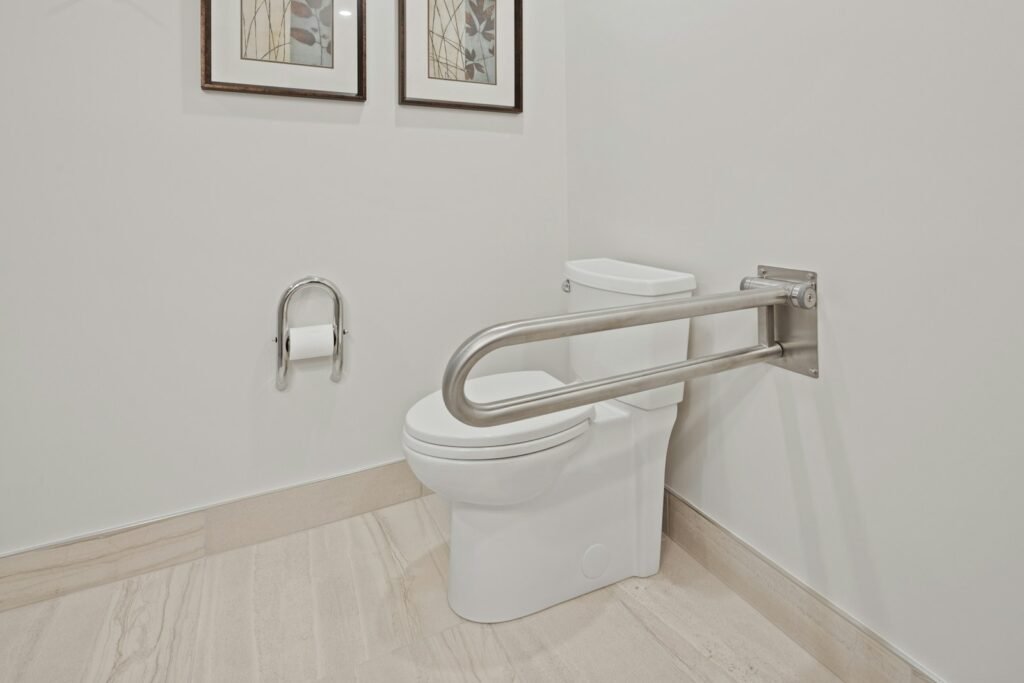
About the grab rail shown above: fixed rails can involve home-modification assessment, installation and permissions. The image is not an example of an item that can automatically be bought through the low-cost Consumables route. Check equipment and installation requirements separately.
NDIS assistive technology cost tiers and next steps
Swipe the table sideways to read all columns.
| Cost per item | Evidence and funding check | Next action |
|---|---|---|
| Low: under $1,500 | Check that it is an eligible support, safe for you and within available funding. Higher-risk items still need advice. | For low-risk items, check Consumables or eligible flexible Core funding before purchasing. |
| Mid: $1,500–$15,000 | Written advice from an appropriate practitioner or AT adviser explains suitability, value and estimated cost; it need not always be a formal assessment. | Check existing AT funding and conditions. If funding must be added, submit evidence and wait for approval before committing. |
| High: over $15,000 | A qualified AT assessor’s report and quote are needed. Include delivery, installation and training costs in the quote. | Submit the evidence to the NDIA and confirm approval and funding before buying. A trial may help establish suitability. |
A wheelchair or communication device can fall into different tiers depending on its actual price. The official mid- and high-cost buying guide explains the evidence route. An adviser’s recommendation is not itself an NDIA funding approval.
Risk matters even when an item is inexpensive
The NDIS generally treats TGA-regulated equipment as higher-risk. That is a useful prompt to seek advice, not an exhaustive safety test. A low price or absence from a particular register does not establish that an item is safe for your circumstances.
Get advice from a relevant AT adviser or assessor for higher-risk equipment. Ask about fitting, safe setup, training, supervision and maintenance. The NDIA may require specific evidence and may describe approved equipment as a stated support; check the wording in your plan.
See the official explanation of AT cost and risk. Do not trial a device in a way that exposes you or a carer to avoidable harm.
Buying low-cost AT through Consumables
Before using this route, check all four conditions:
- The item is an NDIS support related to your disability, not an ordinary expense outside the funding rules.
- It costs under $1,500 per item.
- You can use it safely; obtain advice if it is higher-risk.
- You have sufficient available funding and the purchase complies with your plan’s restrictions.
You do not generally need to send a quote for approval for an eligible low-cost item when the necessary funds are available. If Consumables funding is insufficient, eligible flexible Core funding may be an option. If no suitable funding is available, contact the NDIA about options, which may include a plan variation.
Follow the official low-cost buying steps. Our Consumables guide explains the other needs that may use the same budget.
Prepare your equipment request
Use this checklist with your adviser. Not every item needs every document; confirm what applies before commissioning an assessment.
- What task is difficult, and what disability-related need will the item address?
- Which item or type of equipment is proposed, and why is it suitable?
- What alternatives have been considered, including simpler equipment, trial or rental?
- What is the full cost, including delivery, fitting, setup and training?
- Is written advice sufficient, or is an assessor’s report required?
- Which budget will pay, how much is available now, and is approval needed?
- Who will supply, fit and maintain it, and what records should be retained?
If funding needs to be added, send the evidence through your my NDIS contact or the NDIS service hub. Call 1800 800 110 if you need help with the next step. Do not rely on a promise of reimbursement for equipment that has not been approved where approval is required.
Trialling or renting before buying
A trial can test whether equipment works in your actual environment. Agree what you are testing—such as independent use, comfort, communication or safe transfers—and ask your adviser how to record the result. Confirm trial costs, collection, return terms and whether any trial payment is credited towards a purchase.
Rental may suit changing needs, a child likely to outgrow equipment, or a temporary gap while an item is repaired. Compare the likely total rental cost with buying, including delivery and return charges. Confirm available funding before signing and plan what happens when the rental ends.
The official guides explain AT trials and AT rental. Training or setup can be just as important as delivery; ask who will help you and your supporters use the equipment safely.
Repairs, maintenance and replacement
Maintenance: ask the supplier for servicing instructions, warranty terms and a maintenance schedule. Keep records. Discuss a backup plan if you cannot safely manage without the item. See NDIS maintenance guidance.
Repairs: check warranty coverage, your repair funding and the approved repairer. Tell the NDIA if essential equipment fails and you do not have enough funding; ask about the urgent-repair pathway and temporary support rather than assuming you must wait for the next reassessment. Follow the repair guidance.
Replacement: obtain evidence of the item’s condition, why repair is unsuitable and whether your needs have changed. The evidence needed may differ from replacing an item with the same type. Use the replacement guidance before committing to a new purchase.
Who pays the supplier?
With NDIA-managed funding you need a registered supplier, who claims directly. With plan-managed funding, send the invoice and required documents to your plan manager. With self-management, you handle claims and payment and retain the required records. Check your available funding and payment arrangements before ordering.
Your choice of supplier does not remove the eligibility, safety or evidence requirements. A plan manager can help with invoices and budget records, but cannot approve equipment that requires an NDIA decision.
Is assistive technology affected by the October funding reset?
The reset targets non-exempt social, economic and community participation and Improved Daily Living funding—not Capital AT funding itself. Specified customised/wearable technology and personal mobility equipment are also listed among exemptions.
However, related professional advice or assessments may be paid from a different category. Do not assume every cost connected to equipment is protected simply because the item is AT. Check each support and its category. Our October funding-changes guide explains timing and exemptions.
Frequently asked questions
What are the NDIS assistive technology cost tiers?
Low-cost is under $1,500 per item, mid-cost is $1,500 to $15,000, and high-cost is over $15,000. Risk and funding conditions must also be checked; cost alone does not determine whether you can buy an item.
Can I buy AT from my Consumables budget?
Often, for eligible low-cost equipment where sufficient funding is available and your plan allows it. Higher-risk items still need appropriate advice. Eligible flexible Core funding may be an option if Consumables funding is insufficient.
Does mid-cost AT always need a formal assessment?
Not always. The official buying guidance accepts written evidence such as a letter, email or report from an appropriate practitioner or AT adviser. Higher-risk equipment may need further assessment; confirm the requirements for your item.
Can I buy high-cost equipment then ask the NDIS to reimburse me?
Do not assume you will be reimbursed. High-cost equipment requires assessment evidence and a quote; confirm NDIA approval and the relevant funding before committing to the purchase.
Can the NDIS fund equipment rental or a trial?
It can where the arrangement meets the funding requirements. Check the necessary evidence, available funding and rental or trial conditions before signing. These options may help when needs are changing or suitability is uncertain.
What if essential equipment breaks?
Contact your supplier or repairer, check warranty and repair funding, and ask the NDIA about urgent repair options if funding is insufficient. Have a backup plan for essential support; do not assume you must wait for a scheduled reassessment.
Not sure which plan manager is right for you?
Tell us about your situation — we'll match you with the most suitable NDIS plan manager. Free, takes 2 minutes, no obligation.
Find my plan manager — submit a free inquirySources and review date
Official guidance checked on 28 September 2026. Follow the linked official pages for updates and requirements that apply to your circumstances.